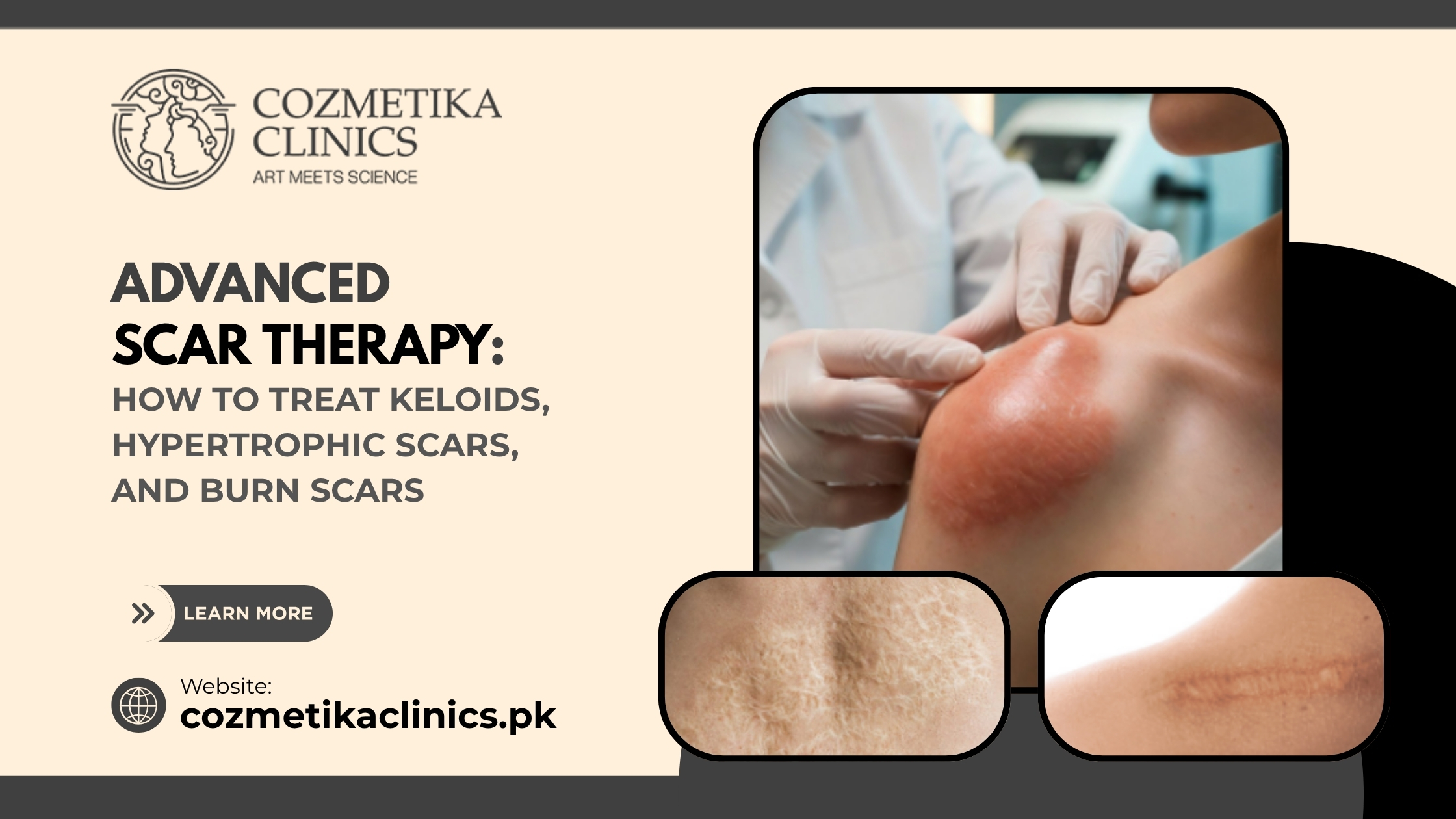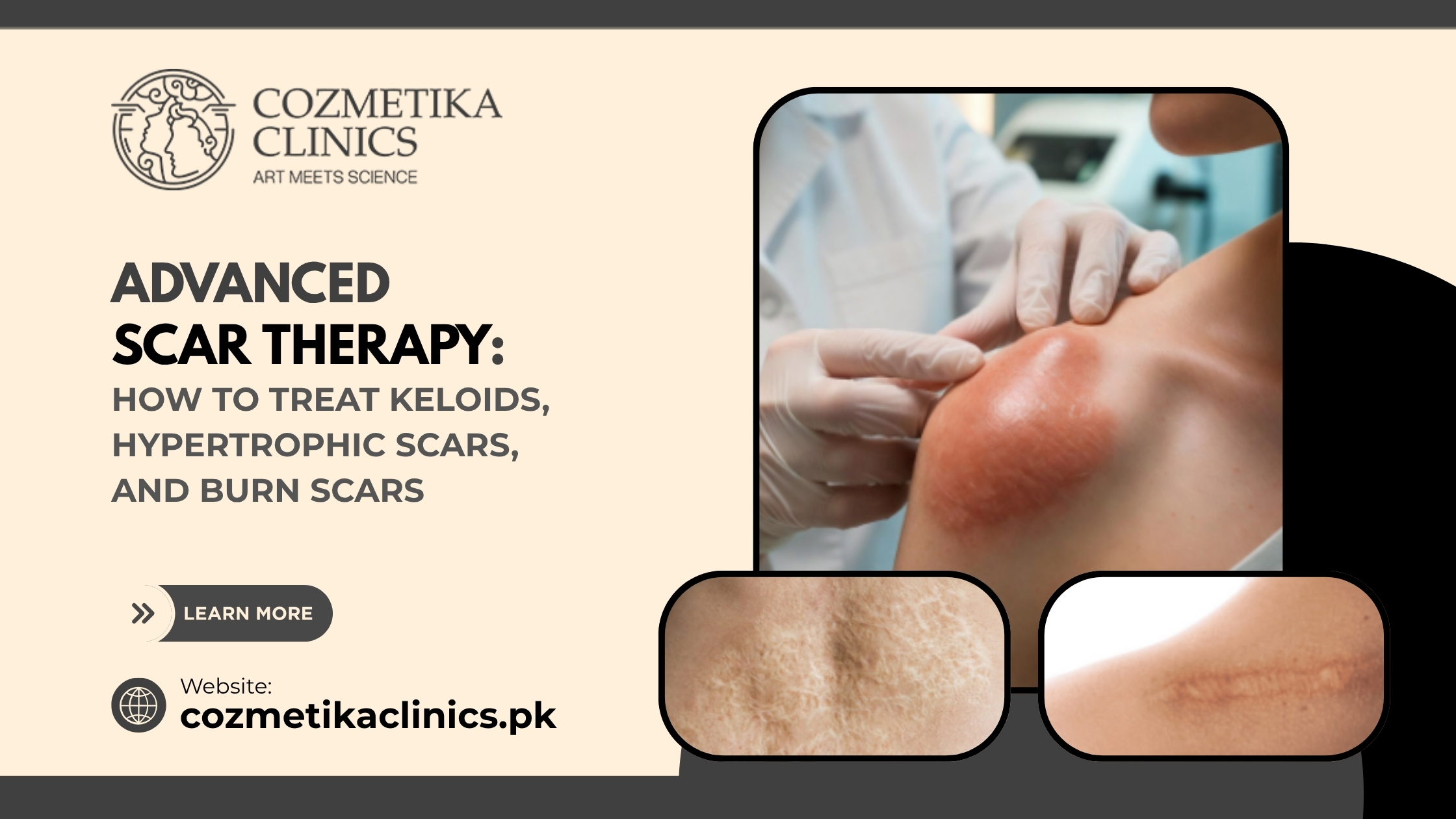
Our skin acts as a protective barrier for the body, protecting it from external threats such as germs, viruses, injuries and allergens. When skin is damaged by burns, surgery or injury, it forms scars. People tend to adopt cosmetic treatments and therapies that help fade scars, repair skin and improve skin texture. Advanced scar therapy and treatments are used to restore the damaged skin and stimulate collagen.
Understanding Types of Scars
1. Keloids
A keloid is a raised scar tissue that grows larger than the area of the initial wound. The skin trauma can take months to years to heal properly. Keloids develop when the body produces excess collagen during the healing phase of the injury.
2. Hypertrophic scars
A hypertrophic scar is a thick raised scar that results from an abnormal wound healing process. Excess collagen develops within the wound, forming a scar.
3. Burn scars
When skin comes in contact with extreme heat or certain chemicals, burn scars appear. A burn is determined by the severity, size and intensity of heat exposure:
· First degree burn: damages upper layer
· Second degree burn: damages epidermis and dermis
· Third degree burn: damages deep tissues, muscles and tendons
Keloid vs. Hypertrophic Scars: What’s the Difference?
| Hypertrophic scars | Keloids | |
| Collagen pattern | Collagen formation on skin’s surface layer | Haphazard collagen formation, increased blood vessels transformation |
| Appearance of scar | Grows inside the area | Grows larger |
| Onset time | 1-2 months | Months to years |
| Color | Pinkish-red tone | Red-purplish tone |
| Cancerous | Rare | High risk |
| Self-healing | Regressive course | Persistent and dependent on therapy and treatment |
| Affected area | Mostly in taut areas | Any skin area |
| Treatment response | Very responsive | Treatment resistant with high chances of recurrence |
How to Treat Keloids: Effective Treatment Options
Corticosteroid Injections: Redness and inflammation reduce along with excess production of collagen to soften and flatten keloids.
Silicone Gel Sheets: Gel hydrates the keloid and improves its appearance over time.
Surgical Scar Removal: Surgical procedure is used to remove persistent or larger scars. To diminish the risk of relapses, it is often combined with radiation therapy or steroid injections.
Cryotherapy: It is best for small sized keloids. It shrinks the keloid gradually by freezing the tissue.
Laser Therapy: It works by stimulating skin remodeling and improves the keloid’s texture, color and thickness.
Radiation Therapy: It keeps the keloid from re-appearing and is used after surgical removal of scar.
Hypertrophic Scar Treatment: Reducing Raised Scars
Pressure & Massage: Pressure and massage in combination are helpful in scar removal. It is a low-cost option to improve texture and appearance of scar.
Cryotherapy: It works by freezing scar with liquid nitrogen.
Laser Therapy: Light beams target scar tissue and pigment to reduce thickness and redness.
Corticosteroid Injections: Steroid is injected into the scar to soften and flatten the appearance. Several sessions are required for optimum results.
Surgical Excision: Scar is cut out and re-stitched. It is often combined with other procedures.
Burn Scar Therapy: Improving Appearance and Mobility
Burn scar revision and contracture scar treatments are designed to improve movement, restore function, and refine the appearance of scarred and uneven skin tone caused by major burns.
Non-Surgical Treatments
· Steroids Injections: To reduce swelling and soften excess collagen
· Laser therapy: Targeted light therapy releasing tightness and fading redness
· Silicone products: Silicone scar sheets/gels are used to soften excess collagen and hydrate skin
· Pressure therapy: to flatten raised scars compression garments are used for 6-12 months
Surgical Treatments
· Flap reconstruction: Blood supply to cover deep areas, moves healthy skin
· Z-plasty: Reposition skin to reduce scar tightness
· Contracture release: Cuts tight scar bands to restore movement
· Skin grafting: Healthy skin is taken from the patient’s body to replace the damaged skin.
When Is Scar Revision Surgery Required?
Scar revision surgery is not permitted for aesthetic purposes under most guidelines. It is medically necessary when the scar restricts movement, affects daily activities, or causes health issues.
Indicators for scar revision
· Irritation or physical discomfort
· Pressure on nerve
· Restricted movement
· Problem in vision
Can Laser Scar Removal Improve Old Scars?
Laser scar removal improves the tone and texture by stimulating collagen and remodeling scar tissues, but it cannot completely remove old scars. It helps:
· Reduce discomfort
· Even out skin tone
· Improve the appearance of depression
· Smooth raised tissue
Factors Affecting The Cost Of Keloid Injection and Scar Treatment?
Keloid injection and treatment cost depends on:
· Combination of therapies
· Facility and location
· Size and severity of scar
· Number of Sessions
· Surgeon’s expertise
Why Choose Cozmetika Clinics Islamabad & Rawalpindi?
Cozmetika Clinics provides personalized treatment plans led by the best dermatologists, tailored to the patient’s scar type and skin tone. We combine advanced laser technology with medical therapies to address pigmentation, skin texture, uneven skin tone, physical discomfort and tightness. Cozmetika Clinics Islamabad and Rawalpindi offers refined and evidence-based treatments and therapies with realistic expectations and continuous follow-up.
FAQs
1. How do we treat burns at home?
Ans: For a light burn, soak the area in cool water or apply antibiotic ointment to avoid any possible infections.
2. What is the best treatment for burn scars?
Ans: Treatments are tailored according to the scar type and skin tone.
3. What is the recovery time after surgery?
Ans. On the same day, patients can resume daily activities, as the procedures are minimally invasive.
4. Is scar removal surgery age specific?
Ans. There is no specific age for the surgery, but doctors treat the scars once they are completely healed. The healing process can take months to years.