Dull skin or thinning hair does not always demand aggressive procedures; there are gentler treatments that can help support a restored look. Platelet-rich plasma therapy (PRP) works differently because it involves a concentrated component of your own blood that will aid in the body’s natural repair and healing processes. The benefits of PRP go beyond just giving hair a new life; it can also enhance skin texture and contribute to a healthier, more youthful appearance. PRP has become a desirable therapy for those who need natural-looking results.
But what actually happens during treatment and what can you expect from it?
How Does PRP Work?
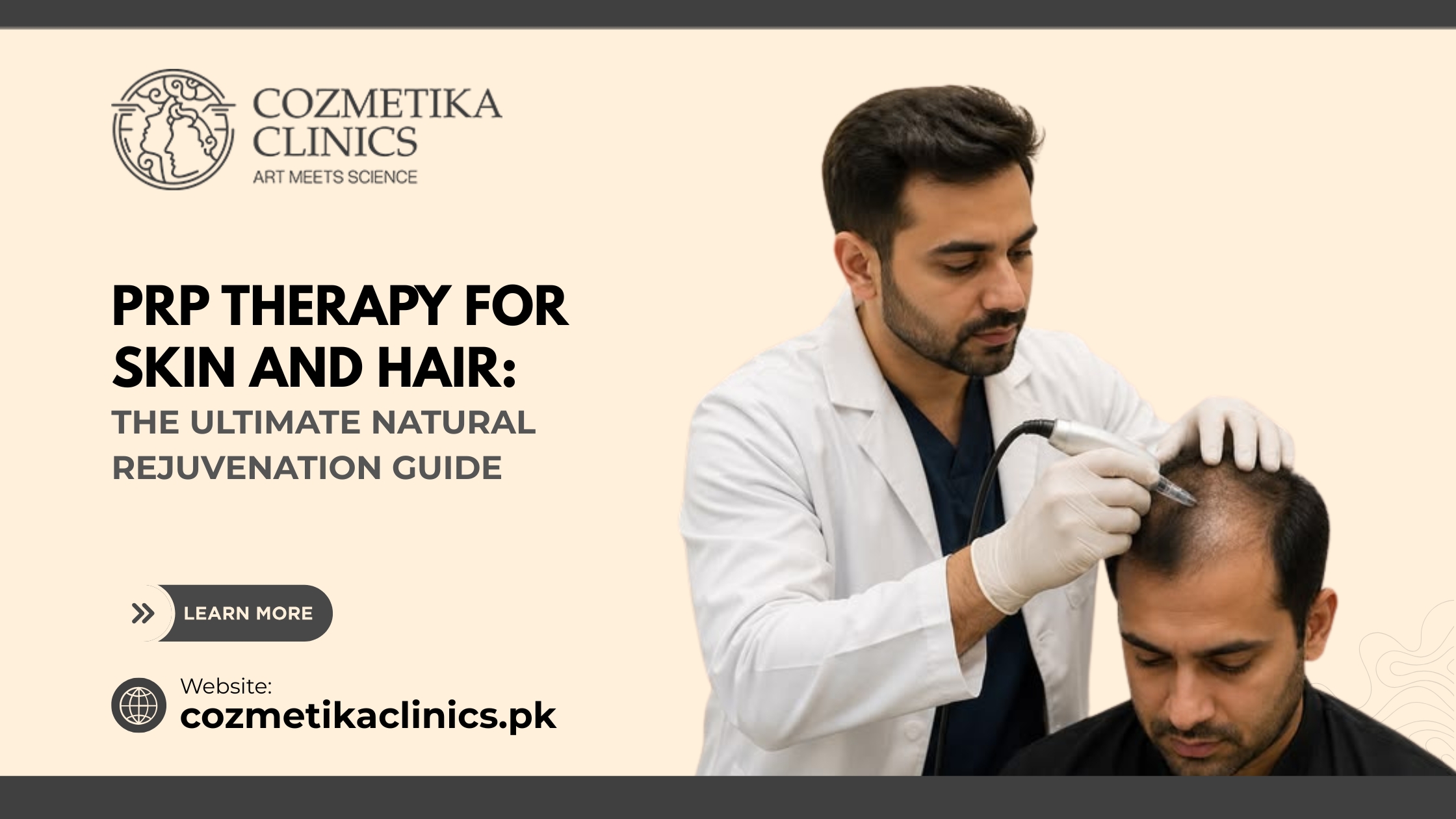
It is a regenerative aesthetic therapy in which a small amount of a patient’s own blood is centrifuged to get concentrated platelet-rich plasma. This platelet-rich plasma contains growth factors responsible for tissue repair and regeneration. This plasma is carefully injected into the scalp or skin using a small needle.
Platelet growth factors promote collagen synthesis, tissue repair and cell activity. This can make the skin softer, firmer and clearer in texture and tone. If injected in the scalp, PRP can help to support existing hair follicles and promote healthy hair growth. Since PRP therapy utilizes the patient’s own blood, it is considered as a natural skin rejuvenation and hair restoration therapy.
PRP for Skin Rejuvenation
PRP for Skin Rejuvenation is more than a facial. People are using PRP because it can significantly enhance their skin instead of concealing flaws. A popular use of PRP is a “vampiric facial” which induces a smoothness, freshness, and a more even complexion, because the skin undergoes its rejuvenation process.
Some frequently discussed PRP facial benefits are:
- Natural synthesis of collagen
- Enhanced radiance and overall skin texture
- Enhanced elasticity and firmness
- Reduction in fine lines
- healthy-looking and refreshed skin tone
- Smoothness of acne scars
PRP is also beneficial for acne scars, especially if uneven texture is a concern. PRP is used alone or in combination with additional aesthetic procedures for an all-inclusive approach, depending on the nature and complexity of scarring.
PRP skin tightening is also a field of interest for people worried about laxity. PRP focuses on stimulating the regenerative processes which may gradually enhance the skin quality instead of mechanically tightening the skin.
Natural Hair Restoration and PRP for Hair Loss
When conventional techniques and procedures do not provide the anticipated results, hair thinning becomes more infuriating. PRP therapy for hair loss provides a non-invasive option which focuses on supplementing the remaining hair follicles.
PRP injections for hair restoration are administered into the scalp for hair restoration. Its growth factors support improving the local environment of follicles, assisting the growth and gradually recovering the hair density.
PRP is not a one solution that fits every sort of hair loss. The root cause, health of the hair follicles, hair loss stage, and general health can all impact treatment outcomes and suitability. A specialized evaluation is crucial before starting the treatment.
Understanding PRP Therapy Before and After
PRP is not an instant solution to your problems because the treatment works gradually, and results can fluctuate from person to person. Improvements gradually become visible as the hair or skin responds to the renewing procedure. Skin might look more refreshed and smoother over time, whereas hair treatments usually demand patience as natural hair grows in cycles.
A personalized treatment plan involves several sittings, subject to individual goals and the treatment area. Your consultant can recommend a suitable timeline once your skin or scalp is assessed.
PRP Treatment Safety and Recovery
PRP treatment safety is dependent on proper patient evaluation, appropriate preparation, and sterilized practice by an experienced professional. Short-term redness, bruising and inflammation occur after the procedure, generally settling on their own. The PRP therapy recovery time is normally very brief, letting people return to their usual routine quickly.
Cost of PRP Treatment
The PRP treatment cost varies depending on a few factors such as the number of sessions required, treatment area, technique used, and the expertise/standards of the clinic.
Instead of picking a treatment based on expense, it is essential to consider the treatment protocol, quality of evaluation, hygiene standards, and consultant’s expertise. The treatment plan along with the cost for individual desires can be understood after a thorough consultation.
Is PRP Right for You?
PRP is an attractive option for people seeking gradual, naturalistic enhancements in their hair or skin. The key element of any PRP treatment is identifying whether it is the right treatment for your skin or hair.
At Cozmetika Clinics, treatment starts with identifying the problems rather than considering a one-size-fits-all strategy. An expert consultation can ascertain whether PRP is appropriate for you or whether other treatments, either alone or in combination approach may deliver improved results.
FAQs
1. How many PRP sessions are required for improving hair and skin?
The number of sessions required depends on the severity of hair loss, an individual’s skin condition, treatment objectives, and response to PRP.
2. Is PRP a painful treatment?
Several injections involved in PRP may cause some discomfort; however, clinics use topical numbing creams to make the procedure less painful and more comfortable.
3. How long does it take to get the results of PRP?
The results of PRP take time. Skin improvement becomes visible within a few weeks, whereas hair restoration usually takes a little bit longer time as hair grows in phases. Multiple sessions may be recommended for best outcomes.
4. Are PRP treatments safe for hair loss?
Yes, PRP is safe for hair loss when performed by an expert aesthetic professional.
5. How long is the recovery period of PRP?
Most people experience little to no downtime. Mild redness, tenderness, inflammation, or bruising may occur for a brief time.
6. Does PRP work for acne scars?
Yes, PRP for acne scars can help collagen synthesis and skin regeneration, to enhance the texture, appearance and smoothness of scarred skin.